Here are a handful of things that have been on my mind since I turned 50:
Recommendations
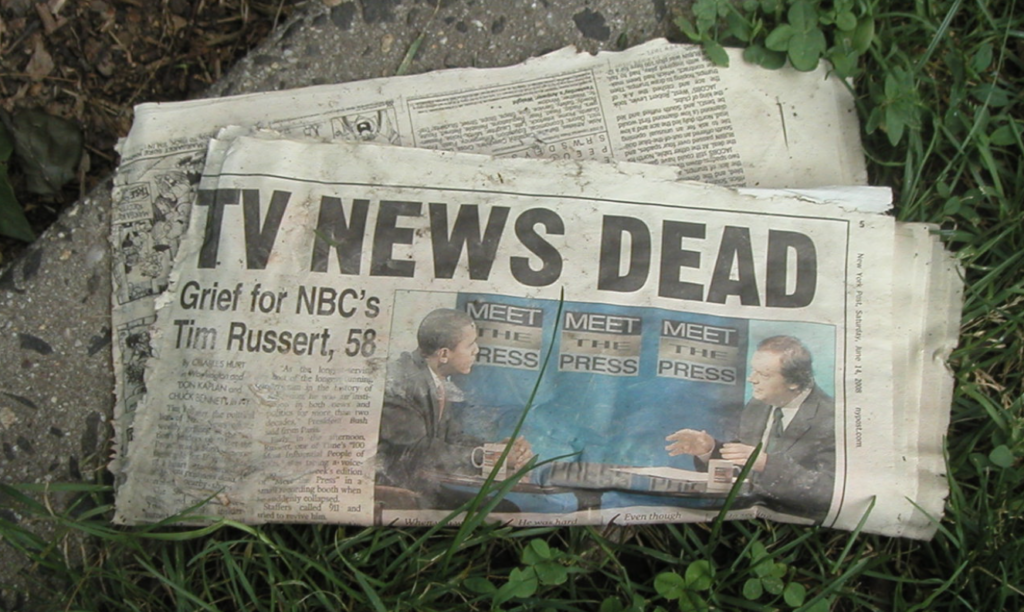
Don’t watch TV News, unless it’s local news or the weather. Get your news from a subscribed periodical.
Don’t charge your phone overnight. Charge it in the morning while you’re getting ready. So: no social media, no emails. Subscribe to a slow periodical like The Week if you need something to read. Check it as sparingly as possible. See if you can get to work before looking.
Turn off app notifications, obviously. All day, every day. SMS is fine. But never let email or a social media app intrude upon whatever it is you’re doing. It can wait. It. Can. Wait.
I strongly recommend deleting any app that allows you to engage with strangers. For most people, this is not a worthwhile investment of your time, unless you have established a business model that requires it. It’s unknowable how many strangers on social media are bots, or worse: real people. Instagram is OK because there’s less to argue about, if you’re doing it right. Read my 10 Commandments of Social Media for more handy tips.
Read nothing in the bathroom. No phone, no magazine, no book. Focus on your work. Related: Psyllium whole husk fiber will change your life.
Ask me about my bone spur and vertigo.
Observations
Nothing about your worth should be tied to your birth. This includes where you were born, who you were born to, what sports teams are located nearby, which houses of worship were nearby, or the color of your skin. You decide your worth and you establish it over time through accomplishments and self-learning and the whims of fate you choose to follow. And remember, as the poet Carrie Fisher has said, “Youth and beauty are not accomplishments.”
Ideologies too often exist to provide a shortcut to a conclusion that someone else wants you to reach.
I could really do without all this new ear hair.
It’s super weird how I get all Proustian about Papa John’s cheesebread now.
I miss the days when my visits to the gym were optional and not mandatory.
If you’re not already aware, the late Charlie Kirk was a representative of the political right who would tour colleges and universities to challenge leftist beliefs. One extremely sharp question he would often lead with was, “what is a woman?” Most folks will necessarily have a difficult time articulating what they know to be intuitively true here, and so this question was perfect for Kirk and his followers to make quick TikTok videos with, to illustrate the supposed incoherency of the left’s positions on gender, as if to say, “slam dunk! Leftists can’t even explain something as basic as what a woman is!” It’s a brilliant tactic, and one that highlights the essential division between the right and the left, at least in the U.S.: the former demands quick, simple certainty, while the left is more comfortable with uncertainty and complexity, and indeed often seeks it out. If I had to guess, I would suspect the political right probably wants to hear the simplest answer: a woman is a human with a vagina.
If that’s how they want to define it, great. They don’t want to know about gender as a social construct. That’s fine.
I don’t know if Charlie Kirk ever asked college kids “what is a man,” but I see that 3 months ago, Kirk posted a video in which a student asked him, “what does it mean to be a man?” Kirk’s response was:
Self control over your fleshly desires
An attitude towards courage and defending those who can’t defend themselves
Fostering a family towards Godly purposes
Picking the fights that the rest of society should not be involved in
Not one of those items mentioned a penis.
Therefore, a man must be something other than a human with a penis.
No less an authority on manhood than Charlie Kirk is on record as saying that being a man is a social role. It is not merely a set of biological features.
Let’s take a look at that list. The first three are certainly virtuous, but I think we can all agree that they are available to women as well as men. The fourth I don’t know quite what to make of, but presumably women should also be allowed the right to pick fights.
Herein lies the problem, and it’s something I learned from Intro to Philosophical Questioning during my freshman year at Hendrix College, taught by Hendrix’s Dean at the time, Dr. John Churchill: The Indeterminacy of Rules.
Briefly: rules aren’t what they seem. There are no rules without exceptions, and no rule ever defines anything entirely. Even a simple, basic rule like “Thou shalt not kill” admits to the necessity of self-defense. But let’s talk definitions specifically. The first example Dean Churchill gave us was: “What is a chair?” Here’s an approximation of that exchange:
A chair is an object you sit on / Is an Ottoman a chair? You sit on it.
A chair is an object with legs that you sit on. / Beds have legs, and you can sit on them.
A chair is a small object with legs that you sit on. / A stool has legs. Is a stool a chair?
A chair is a small object with legs that you sit on and has a back support. / Like a bench?
A chair is a small object with legs that you sit on and has back support, for one person to use.
Finally, we have arrived at an explicit definition of something as simple as a chair. It has 5 essential attributes that required some time to establish.
Now, imagine if Charlie Kirk asked college students for their definition of a chair. They would have stumbled around in precisely the same manner in an effort to explicitly define something that they intuitively already understood. Slam dunk, college idiots! You can’t even say what a chair is! “It’s not a trick question!” as Kirk would often say.
This forced me to ask myself, “what is a woman?” and the briefest answer I can come up with to delineate something I intuitively understand is: a woman is a social construct that varies across cultures but is generally analogous to biologically female humans, with some important exceptions.
Many on the political right are deeply uncomfortable with the uncertainty involved in that definition, and in the many videos of this question that Kirk has posted, his crowd of supporters groans audibly at any respondent who talks about social constructs.
What is a social construct? I’ll try to keep this short: a social construct is an idea that a society creates. Money is a social construct. Borders are a social construct. Laws are social constructs. They are non-material things that nevertheless act as important structural supports to a society. Gender is a social construct that societies create to fulfill certain societal roles. To quickly establish gender (because our privates are necessarily hidden for practical reasons), we must be able to distinguish gender roles in a physical way. There are specific items of clothing and fashion, for example, that are traditionally associated with women such as skirts, earrings, long hair, nail polish, etc. But can men wear skirts? Ask a Scotsman. Can men have long hair? The Beatles scandalized America in 1964 with their slightly longer hair styles and rock stars have had long hair ever since – it made the political right uncomfortable then, and their limits just keep getting pushed. Hair metal bands are probably OK, but drag queens are where they draw the line these days.
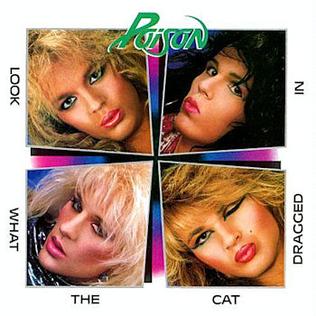
Charlie Kirk probably didn’t own a copy of Poison’s “Look What the Cat Dragged1* In,” but someone representing for his position would probably respond that this whole men-dressing-as-women thing is part of a bigger slope that has just gotten more slippery since 1964 and we need to climb back up the slide.
I’m sympathetic to that notion, honestly, I am. Because, as feminism granted women the option of independence, the political left probably had no idea that raising women up to par with men would impact men at all.
But it has. Deeply.
Because if a woman can do anything a man can, then what is a man?
It’s probably a more important question than, “what is a woman?”
It seems to me that a significant number of men base most or all of their individual identity on just being a man (or being a white man, or a Black man, or a white Christian American man, etc.), on doing the things men do, and joining the clubs men join. When women join in, what belongs solely to men anymore? What even is a man anymore?
I have a hypothesis that men define themselves largely in opposition to women. Men are “not-women.” Women birth babies; men are not birthers. Women have entire industries to cater to their unique fashion and style (cosmetics, lingerie, shoes, handbags). Men do not have those – men are defined socially by whatever that stuff is not.
And that’s just in the West. In many parts of the East, women are the ones who wear niqabs, burkas, and hijabs. Men are the ones who don’t. Men are the not-women. They’re easy to spot because they are the ones not wearing certain traditional markers of femininity.
One could make the case that women have traditionally been defined and treated as not-men, and that’s certainly true. It may be the case that the only way to define each gender is in opposition to the other. That’s getting harder and harder to do these days, though.
(As an aside, I feel that ironically the Democratic Party has for years defined itself as the Not-Republicans, and are suffering a similar existential crisis.)
So where do we go from here? How can we find common ground on what people can be allowed to do with their gender roles in a society? I don’t yet know the answer, but I do think understanding the question is the first step. I have some theories I’ll share in future posts.
The essential problem, as I see it, is that no virtue is exclusive to men anymore. We need to find ways for people to establish identities for themselves that aren’t predicated on needlessly restrictive traditions, shame-based coercion, or in-group submersion. And for the people who want to maintain those traditions, we need to allow them to do so without acrimony towards them or from them towards us. New York City has figured this out. We have niqabs, sheitels, and ponytails all peacefully occupying the same park near my apartment. We need the rest of the country and the world do likewise until we get these things figured out.
The farmer who picked your coffee beans (technically seed fruit).
The roasters who roasted your coffee.
The truck driver who drove the coffee to port.
The crew of the boat that shipped the coffee.
The truck driver who drove the coffee to the warehouse.
The warehouse staff that ground the coffee, packaged it, and kept it safe, clean and dry.
The truck driver who drove the coffee to the store.
The staff of the grocery store that sold you the coffee.
The employees of the manufacturer of your coffee maker.
The employees of the store that sold you the coffee maker.
The farmer who raised the hens for your eggs.
The staff of the chicken farm who gathered the eggs.
The truck driver who drove the eggs to the warehouse.
The warehouse staff that kept the eggs safe, clean and dry.
The truck driver who drove the eggs to the store.
The staff of the grocery store that sold you the eggs.
The farmer who planted and harvested the wheat for your toast.
The staff of the farm who processed the wheat into flour.
The truck driver who drove the flour to the bakery.
The staff of the bakery that made and packaged the bread.
The truck driver who drove the bread to the store.
The staff of the grocery store that sold you the bread.
The employees of the companies who made your computers and mobile devices.
The miners who dug up the minerals for your device’s components.
The truck drivers who drove the minerals to the processing plants.
The employees of the processing plants who made usable part for the devices.
The truck drivers who drove the parts to the factory.
The employees of the third-party providers who made your device’s materials such as chips, glass screens, batteries, etc.
The factory employees who assembled the computers and mobile devices.
The truck drivers who drove the devices to port.
The crew of the ships that sailed the devices to the U.S.
The truck drivers that drove the devices to the warehouses.
The staff of the warehouses that stored the inventory.
The truck drivers who drove the devices to stores.
The staff of the store who sold you your devices.
The workers who gathered the cotton for your clothes.
The staff of the textile plant that converted your cotton into fabric.
The truck driver who drove the fabric to the factory.
The factory staff who converted the fabric into clothes.
The truck driver who drove the clothes to port.
The crew of the ship that sailed the clothes to the U.S.
The truck driver who drove the clothes to the warehouse.
The staff of the warehouse that stored the clothes.
The truck driver who drove the clothes to the store.
The staff of the store who sold you the clothes.
The miners, the workers, and the farmers who gathered the raw chemicals for your toiletries.
The truck drivers who drove the chemicals to the processing plants.
The staff of the many chemical plants that manufactured your toothpaste, toothbrushes, floss, shampoo, conditioner, soap, vitamins, medications, and more.
The truck drivers who drove the products to the warehouses.
The staffs of those warehouses.
The truck drivers who drove the products to stores.
The staff of the stores who sold you the products.
The FDA food and product safety inspectors who inspected your food, medicines, and other products.
The OSHA safety staff who licensed the workers and protected their workplaces.
The Department of Transportation at federal and state levels that ensured safe, quality roadways for you and all the truckers above to drive on.
The state troopers, county sheriffs, and municipal police that kept drivers safe from lawbreakers.
The Better Business Bureau, Internal Revenue Service, Federal Trade Commission, and various business licensing bureaus who prevented businesses from scamming you or selling you sh*tty, dangerous products.
The NOAA and National Weather Service staffers and meteorologists who gathered data to predict weather systems, and who modeled threats such as thunderstorms, tornadoes, floods, and hurricanes.
The internet service providers who maintained your internet service and the servers of all the other organizations in this list.
The Environmental Protection Agency that helped keep your air and water clean.
The Food and Drug Administration that tested the food and medication you put into your body.
The Centers for Disease Control that prevented outbreaks, monitored spread, and administered medications to mitigate the effects of diseases.
The Securities and Exchange Commission that tried to ensure the stock market won’t collapse due to shortsighted greed.
The Federal Deposit Insurance Corporation that helped prevent bank failures that would erode the value of all your money, and the Office of the Comptroller of the Currency (OCC) bank examiners who kept banks from defrauding you.
The staff of the banks that hold your money and help you build savings.
The Social Security Administration that tracks your payments so that you can withdraw them in the future.
The Department of Homeland Security that prevented a terrorist attack (hopefully).
The journalists who kept you informed about local, national, and world events so that you can be an informed voter in elections, and make informed decisions about your daily movements, purchases, travel decisions, investments, and more.
The airport ground crew and airline mechanics who kept all the planes in the air.
The air traffic controllers who prevented planes from colliding.
The pilots, cabin crew, and air marshals who kept safe the planes you fly in.
The airport staff and TSA agents who maintain airport operations.
The airline personnel who built and delivered safe aircraft.
The drivers of the cars and cabs who took you to and from the airport.
The restaurant workers who prepared your safe and tasty lunch, and the dishwashers who cleaned the dishes.
The maintenance workers and janitors who cleaned the bathrooms you use.
The hotel staff and their housekeeping personnel who cleaned your room.
The municipal water system personnel who tested your water and kept it clean.
The municipal sanitation department personnel who kept your streets clean.
The energy and power company personnel who kept the lights on in your home and everyone else’s.
The insurance company personnel who will answer the phone and provide you with services in the event of a life, home, or automotive emergency.
The EMTs and hospital staff who were ready to assist you at a moment’s notice in an emergency.
The fire department staff who were ready to assist you at a moment’s notice in an emergency.
The 911 dispatchers who were ready to assist you at a moment’s notice in an emergency.
The poison control operators who were ready to assist you at a moment’s notice in an emergency.
The tow truck company employees who were ready to assist you at a moment’s notice in an emergency.
The AAA or other roadside assistance operators who were ready to assist you at a moment’s notice in an emergency.
The nurses and doctors of your doctor’s office who were ready to assist you with your symptoms.
The dentist and his staff who kept your teeth clean and healthy.
The staff of the dealership that sold you your car.
The employees of the car company that made your car.
The state safety inspectors who inspected your car on a regular basis.
The employees of all the companies that provided your car company with materials such as tires, fabric, computers, AC, and other technology.
The staff of the garage that performed your oil changes and other maintenance.
The staff of the body shop that fixed your car.
The staff and corporate employees of the gas station chain where you bought your fuel.
The staff of the oil companies that made your fuel.
The inspectors who tested the safety of your gas station fuel pumps.
The truck drivers who delivered your fuel to the gas station.
The employees of the refineries who generated your gasoline.
The employees of the oil companies that extracted the petroleum to make your gas.
The Bureau of Safety and Environmental Enforcement that regulated offshore oil extraction so your beaches and your seafood don’t get covered in oil.
The mayor and municipal employees of your city who made decisions on your behalf about how best to allocate your city services.
The governor and state legislators who made decisions on your behalf about how best to allocate your state services and determine your state’s laws.
The city and county judges and attorneys who determined the outcome of criminal cases that prosecuted the criminals or exonerated the innocent (ideally).
The teachers who taught your children for 7 hours today.
The cafeteria staff who fed your children.
The school administrators who operated the schools and hired the teachers.
The editors, writers, and administrators who published your textbooks.
The school boards who decided which textbooks will be used (for better or worse).
The companies who made the non-toxic school supplies, sturdy backpacks, and food containers.
The coworkers at your job who provided you with materials, provided you with information, oversaw your work, provided feedback on your performance, and issued your checks.
The customers of your company who paid your salary.
The friends and family members of yours who kept you sane. And the ones who didn’t.
The elected, hired, and appointed members of the federal government, who set the policies that impacted all of the above.
This list is an extremely abridged fraction of all the people you depend on every hour of the day. The list could be deepened and extended for many hours.
Most of us understand that we need each other’s services. But really, we need each other. The central tenet of Western life is not “Every Man for Himself.” We are in this together. Individualism is a lie we’ve been sold by Madison Avenue because individualism sells more units. If they can pit us against the Joneses, we’ll buy whatever is being advertised so that we can keep up.
If we were truly independent individuals, we could be dropped naked into a forest with no tools and make for ourselves a livable, enjoyable life. An extremely small number of people can accomplish that, and if they can, they’re probably lying about their quality of life.
Look back at the list, and you’ll see a few instances where an attack of some kind could potentially ruin your day or your life. I marked a few with parentheses. Maybe you don’t think the CDC does such a great job, for example – but you must consider all the times an easily identified outbreak was successfully contained, and you just didn’t hear about it. We only hear about the things that don’t go right.
Also, tally up every time I referred to a truck driver. It’s a lot, isn’t it? It’s way more than you probably thought. Each of us needs a lot of truck drivers every single day.
As you go about your day and participate in our consumer economy, think about all the ways that we’re in this together. We’re not competing with each other to win some kind of capitalist game. We need each other and we need government to do the things that the market can’t (or won’t) do.
No one seems to be able to effectively respond to the questions of “when was America great” and “what specific things do we need to get back to,” so here are a few things we’ve lost that we should consider restoring:
Make America read news again
Make America local newscast again
Make America radio again
Make America support quality public education again
Make America build housing again
Make America re-open mental hospitals again (but competent this time)
Make America live downtown again
Make America create public arts again
Make America walkable again
Make American doctors housecall again
Make America Broadcast Fairness again
Make Americans’ top marginal tax rate 1963 again (adjusted for inflation)
I want to thank everyone who has sent me messages (and even a phone call from an old friend!) thanking me for my recent Facebook posts highlighting the recent takeover of U.S. government systems by an African national who does not have a Congressionally approved leadership position (you know the one). I also want to thank my conservative friends for providing me with insight into how they are rationalizing this unprecedented smash-and-grab operation disguised as an efficient effort to uncover fraud, waste, and abuse.
Only one thing is clear to me at this point in time: if the Muskovites cared about efficiency, they’d be doing the job efficiently. But they don’t, so they’re doing it as quickly as possible. That way, they can offer their insincere apologies later.
Consider this: In 1972, the president authorized G. Gordon Liddy’s operatives to break into the Watergate building. In 2025, the president authorized EIon’s operatives to break into government data systems. How are these not the same? Because the latter is much worse, by mind-boggling orders of magnitude. The main currency of the 21st century is information – your information, and the government’s.
To cope with all this, it will be helpful to think of the present day and the next few years as a slow-motion invisible blitz, because unlike the London Blitz on 1940-41, what is being destroyed are systems and organizations. Systems that monitor the weather so we can predict storms. Systems that ensure payment for Medicaid recipients. Systems that ensure planes don’t collide. Organizations that fight crime. Organizations that prevent corruption. Organizations that ensure the rich pay their taxes. Organizations that prevent pandemics and outbreaks. Organizations that pay for themselves many times over like the Parks system. Organizations that feed the desperate in other countries as a national security measure – because we are safer as a nation when desperate people are fed. Our own agribusiness depends on sending our food overseas. Local jobs are on the line. Ask yourself who benefits from all this, because it is not the American taxpayer.
So what can you do? Here are some practical steps you can take:
Call your Congressperson daily or weekly. Just make it a habit to make your voice heard. Be unrelenting.
Subscribe to news publications. If you’re not paying for it, you are the thing being sold. Internet news is an eyeball-harvesting operation. They want your eyes and they want your clicks. If you must use eyeball harvesters like CNN.com and FoxNews.com, etc., do so with caution. Personally I subscribe to magazines like The Week (strongly recommended as it’s a weekly digest that provides context from across the political spectrum), as well as The Atlantic and the New Yorker, and I subscribe digitally to the NY Times, the Wall Street Journal, Rolling Stone, and the Washington Post (yes, Bezos is a toad, but we need the journalists; nobody needs the opinion pages). If you’re a conservative, subscribe to the Wall Street Journal as well as the National Review and American Conservative, because they employ journalists and fact-checkers, not eyeball harvesters.
You have to engage. If you weren’t already, you have to become more aware of what’s going on in the world. You have to know that what is happening is part of a global pattern (Erdogan in Turkey, AfD in Germany, Bolsonaro in Brazil, Orban in Hungary). For example: when our president said Canada was a fentanyl hotspot, I immediately knew he was lying because that has not been a major news item from any outlet ever. While fentanyl is everywhere (mainly Mexico), Canada is not a major source. What the GOP loves to do is take some small incident or phenomenon and present it as a major threat – and their base doesn’t know any different because they don’t read any news; they mainly watch eyeball-harvesting news organization if they pay attention at all.
Know where you stand on immigration. Yes, we have lots of undocumented immigrants, but is that a crime? It’s actually not. Do we have tons of undocumented immigrants? We do, but are they stealing citizen jobs and taking undue benefits? No; by and large they are doing the jobs citizens don’t want to do, and they are paying taxes like the rest of us. Are some of them dangerous? Certainly, but the immigrant crime rate is absurdly low compared to the general population (as even the libertarian think tank The Cato Institute will tell you). So what do we do about it? Give them a path to citizenship because it’s what most citizens want, it’s what the immigrants deserve if they have a job and a home here, and we actually need them because the country’s birthrate is declining. Our current president exploits our citizens’ ignorance on this topic and his base uncritically believes him because humans are a trusting bunch by default.
Watch your keywords on social media. I’m not saying that you’re being watched (yet), but caution costs you nothing in the event that they decide to start watching you. Try to avoid saying certain names (I usually call him Don, which is less of a targetable keyword than his last name, and I type EIon with a capital “i” instead of lowercase “L”, or I just say “they” when posting an article because the context is clear). Also probably a good idea to obfuscate hot-button terms with numbers and special characters (rac1st, wh1te supremac1st), to avoid provoking any bots. I would bet that Facebook already has a method for identifying political leanings of users and it’s only a matter of time before we get targeted in some way. Some of my friends have reported seeing a lot of strange algorithmic behaviors in their feeds, so it’s probably already starting. Also, John Oliver has a good video worth watching on steps you can take to protect yourself.
If possible, control your content. Start a blog and talk there, and link it to Facebook. We need to decentralize the Internet again.
Share this video often. It was made by the U.S. Department of Defense in 1945 to inoculate citizens against fascist rhetoric. Our own country tried to warn us. It should have been shown in high schools for decades, but we tend to teach history as names and dates instead of actual lessons learned.
Talk about thought-terminating clichés – it’s the main right-wing weapon in our national dialogue. Under Obama they tried to make “socialism” happen as a slur, but it didn’t take, so they tried “BLM,” then it was “CRT,” now it’s “DEI” and “woke.” The fringe right even love to invoke “Marxists,” but speaking as a leftist, I can tell you that the number of actual Marxists in this country is hilariously low (just like Canadian fentanyl). Few on the right will ever try to explain what they think these terms mean, and when they try, it’s definitely not accurate to each terms’ origins. These terms mean whatever their users want them to mean, because these terms have been consciously crafted into bogeymen pejoratives. Ever since the fall of the Soviet Union, the GOP has needed a bogeyman to mobilize votes. For awhile they had al Qaeda and “the war on terror” but those have faded as a domestic concern. Now they use immigrants as a scapegoat to convince us that we’re being attacked. But this is a tactic as old as time.
“The people can always be brought to the bidding of the leaders. That is easy. All you have to do is tell them they are being attacked, and denounce the peacemakers for lack of patriotism and exposing the country to danger. It works the same in any country.”
It’s called “katastrophenpolitik,” a term coined by Nazi industrialist Alfred Hugenberg. The goal is to polarize public opinion with incendiary news stories, some of them entirely fabricated, to cause confusion and outrage. Hugenberg understood that if you can hollow out the political center, consensus would become impossible and democracy would collapse. Sound familiar?
Find economic methods of rebellion. If you’re an Amazon Prime subscriber, consider unsubscribing. Bezos needs to hear from you, and that’s the only line to him we have. Here is the link, as they make it hard to find. Shop local again. Your community needs you.
Be a responsible poster of facts. See my post about the 10 Social Media commandments. Even if you read something in a Facebook post from a reasonably trusted source, verify it externally.
Advocate for nonviolence. This is important. At the first sign of violence, our present chief executive will use it as a pretext to call in the U.S. military to quell resistance. He’s dying to do it. We can’t let that happen. No more Luigis, please.
Download or print your social security statements, and any other government financial data that you have. Choose paper-on again.
Be ready to help the financially vulnerable. If you have discretionary income, be prepared to help friends make medical payments. Buy less. Unsubscribe from a streaming service. Refactor your monthly budget. Watch for where services are being disrupted and volunteer where you can. If you are financially vulnerable, do not hesitate to ask for help. We’re living through a time of great uncertainty; these are special circumstances. Setting up a GoFundMe is easy. If you need help, let me know.
Run for office. I know it sounds crazy, but if you’re an attorney or someone with even a basic grasp of political issues, or even something of a minor local celebrity, you are desperately needed. Besides, the country’s standards have never been lower. Alabama elected a football coach. Georgia elected a CrossFit trainer. The GOP does not care about qualifications, so other parties shouldn’t need to, either. This country weirdly remains a land of opportunity in many strange and unpredictable ways. Get out there.
Expect the worst. Because half the pain is being surprised. A friend of mine who has lived and worked in China provided this commentary recently:
Life in China was life in a dictatorship, but a competent one where life was getting measurably better for ordinary people at a rapid pace. It’s the opposite here – everything is going in the wrong direction, and everything is getting worse. This isn’t specific to any particular president or administration. It has been going on for a long time, we’re just at the logical conclusion.
The US isn’t really a country, it’s an economic zone. The government isn’t really a government, it’s a corporation. When you view things in that light, a private equity takeover (which is currently what is happening) makes perfect sense. But it’s not good for anyone involved except for the corporate raiders.
The rest of the world will eventually recover. I don’t think the US will. It’ll still exist in some form; after all, the former Soviet Union does. But having visited a lot of it (and being married to someone from a former Soviet republic), it’s a shadow of its former self. It’s a really special thing to be and live in a superpower – on a global scale, it’s the nation-state equivalent of being a rock star. Today, Russia is like a washed up second tier metal band from the 80s playing the Emerald Queen. And the US is on the way to becoming nothing more than its backup vocals.
The next few years are going to get ugly. Stay sane. Meet up with friends. Shop local. Attend rallies and protests. Buy local eggs and produce. Be aware of where you hold tension in your body. Meditate. The most important thing you can do in a slow-moving crisis like this is remain calm. Just remember we’re dealing with neo-fascists and their base consists of your friends and neighbors and family members who have been hypnotized by a set of low-grade conspiracy theories. Be kind to them. Slowly many of them will wake up. Remember that they are not the enemy. Be nice until it’s time to not be nice (they will let you know when that is). And remember: fascism always fails.
If a stranger’s opinion bothers you, it’s partly because you’re afraid that their opinion might be correct. But remember: fear is the mind-killer.
The words of an untrusted stranger have never successfully challenged anyone’s biases or worldview.
Thou shalt not accept friend requests from total strangers
Zero friends in common? Treat with suspicion.
If you feel you must send a friend request to a stranger, you must also send a message explaining why you’d like to add them as a friend. It’s not 2002 anymore.
Thou shalt always check the source
Just because someone you trust posted something, that doesn’t mean it’s true.
Just because someone went to the trouble of making a meme, that doesn’t mean it’s true.
There are trolls out there making fresh false memes every single day.
Treat all newsworthy information as false until corroborated by a reputable, external source. Exit the social media interface and find the information yourself.
Review the domain name and date of any article you post or read. If it’s not a reputable media outlet or institution that you’ve ever heard of, chances are good that it’s bunk.
If you are of the belief that no sources are reputable, then good luck ever convincing anyone of anything. You should stop talking to people; you’re wasting their time and yours.
Thou shalt always read the article before commenting
If you don’t, be prepared to miss important details and context and be judged accordingly.
Thou shalt comment with intention
Before commenting, always ask yourself what you hope your comment will accomplish.
Do not comment unless you are prepared to receive replies.
Thou shalt remain civil
In any contentious exchange, usage of derogatory name-calling, all caps, or multiple exclamation points will void any credibility you may have earned, and you will forfeit the debate.
Anyone who uses the word “cuck” forfeits all credibility.
Thou shalt not say anything on social media thou wouldnst say in public
If you are prepared to besmirch certain groups of people, always be prepared to say it to their faces in the real world. Anything less is cowardice.
Have a spicy opinion about Muslims, Christians, Republicans, Democrats, atheists, gays, or trans people? Go find one and tell them in person and see what happens.
Can you be sure the person you’re engaging with is not a Russian troll? Can you be sure they are mentally stable? Are they a 9th grader? Are they a 45-year old with a 9th grade education and no pants? If you don’t know the answer, you should avoid wasting your time.
Avoid attempting to reason people out of opinions they have not reasoned themselves into.
If you’re not paying for it, you are the thing being sold
Social media is free because your eyeballs are being harvested and sold for ad revenue. If you want to read real news, you need to pay money to a newsgathering organization that employs fact-checkers.
Turn off 24-hour cable news. CNN, MSNBC, Fox News, Newsmax, OAN, all of it. It was a mistake. If you must read CNN.com just do it for breaking news. All analyses from these outlets are specifically designed to keep your eyeballs glued to the TV for the next word from their sponsor.
They fuck you up, your mum and dad. They may not mean to, but they do. They fill you with the faults they had And add some extra, just for you.
But they were fucked up in their turn By fools in old-style hats and coats, Who half the time were soppy-stern And half at one another’s throats.
Man hands on misery to man. It deepens like a coastal shelf. Get out as early as you can, And don’t have any kids yourself.
Philip Larkin and Frank Zappa would’ve been fast friends. Larkin’s poem, “This Be the Verse” almost sounds as if it could’ve been lyrics on a Frank Zappa album.
If you’re a fan of Frank Zappa’s music, there’s a better than average chance you’re a fan of Frank Zappa the man. For a certain type of kid growing up in a certain set of circumstances, discovering Frank Zappa is like receiving a transmission from outer space indicating there is life on another, far more interesting planet.
As a social commentator, Frank was farsighted. He could see where our politics were heading, where the music industry was trending, where technology was leading us. He was rigorously logical and level-headed in a time of social upheaval. He was ethical in a dirty business. He knew how to get the best out of different types of musicians. And through it all he maintained a finely tuned bullsh*t detector whilst living in Hollywood, a town that runs on more sh*t than Mad Max’s Barter Town.
For all his talents and observational acumen, one thing Frank was not good at was being a parent or a husband. As his daughter, Moon, illustrates in her new memoir, “Earth to Moon,” Frank’s acute intelligence and perception did not mean that he or his wife, Gail, could be described as model parents. Frank was largely absent from his children’s lives, and he treated his wife less as a spouse and more as an administrator and sex partner (one of several). And Gail, utterly and unhealthily devoted to Frank, seemed to view parenting as another in a long series of responsibilities in the larger administration of service to Frank. To fans of Frank the man, these revelations will doubtless come as a huge disappointment, but probably not a complete shock.
To the outside observer, the Zappa children seemed to be ideal exemplars of positive, fully functional counter-culture values: they were talented, mildly eccentric, and nonconformist. They eschewed high school, got their GEDs, and led clean, drug-free lives that stood in stark contrast to so many other Hollywood kids. Maybe they even seemed like the family you wish you had. Some Zappa fans, myself included, almost felt like we knew the Zappas. We wanted to be part of their scene. How cool would it be to enter their storied House, to hang with the weird/cool kids and the high priest of the weirdos, Frank Zappa? Who wouldn’t want the inadvertent pop star Moon Unit (author of Frank’s sole chart hit), and Diva, champion knitter, as sisters? Or ace guitarist Dweezil and maniac Tom Jones impersonator Ahmet, for brothers? What a kick it would be to live in a house with resident artists like Cal Schenkel and Bruce Bickford, with occasional visits from musicians like Edward Van Halen or Steve Vai. Or so we imagined.
So it is with extreme sadness that Moon’s memoir arrives to dispel us of these kaleidoscopic notions. The Zappa family weren’t models of anything but dysfunction, it turns out. As a result of Frank’s absence, and Gail’s devotion to Frank, the children were effectively starved for attention, hugs, basic nutrition, an education, and emotional support. According to Moon, they were given zero instruction on how to become caring, mature human beings. It is despite their parenting that the Zappa kids became mostly decent people, not because of it.
Some of the particulars that Moon describes will be recognizable to many Gen X kids and their Boomer parents of a certain bent in the 1970s: the pervasive smoking, the infidelity, the abandoning of children to figure things out for themselves. Add to this the countercultural trends rampant in California in that time: the wholesale rejection of conventional moral sentiments and family norms in favor of the dubious alternatives of half-baked Eastern spirituality and homebrew witchcraft. Although Frank largely rolled his eyes at those newfangled belief systems, Gail was as enthusiastic a participant in them as any of the Manson girls were.
Speaking of Charles Manson, if Frank Zappa had wanted to become a cult leader, he could easily have done so. Throngs of devoted groupies and musicians were always in his orbit. If he had asked them to do terrible things, many would probably have complied. As it was, the Cult of Frank did exist to varying degrees. In her book, Moon describes Gail’s household priorities with Frank at the top of a pyramid, and everyone else further down somewhere. A variety of courtiers passed through the house, jockeying for attention from Frank the pharaoh – artists, musicians, groupies, celebrities, and assorted “people who do stuff that is not normal.” The children had to continually compete with everyone else in the house for their parents’ attention.
For all his countercultural milieu, though, Frank was a classic 1950s American male: a misogynistic, capitalistic master of the universe who did as he pleased, with who he pleased, without any consideration for the needs and feelings of others. He was not emotionally available to his wife or children, but he was always sexually available to his partners of choice. And Gail, for her part, suffered because of her devotion to a man incapable of being devoted to anything other than his work.
In the early days of The Cult of Frank, Gail secured her spot as A#1 amongst her many attractive lady competitors by becoming pregnant with Moon (Moon does not discuss whether Gail trapped Frank by becoming pregnant against his wishes, but Pauline Butcher’s 2011 book, “Freak Out! My Life with Frank Zappa,” left me with that impression). To his credit, Frank was self-aware enough to know that he did not want to have kids, but ultimately went along with Gail’s program. When Moon was born, Frank gave her the middle name, “Unit,” to herald the arrival of their new family unit. To the intense sadness of all parties involved, that unity never quite materialized.
Moon’s account of her childhood takes up most of the first half of the book, and she demonstrates a preternatural ability to channel the voice and thoughts of a child living through the moments in the book as they happen. Her diction and syntax become simplified, and the distance between 2024 and 1976 is erased in the process. The effect is immediate; the reader is brought right along with her. Some portions of the book are so cinematically drawn that I felt as if I were shooting footage in my head for a Cameron Crowe movie entitled, “Almost Famous.”
I wish that someone were available to provide the context behind the childhoods of Gail and Frank. To play armchair psychologist for a moment, it seems to me that Frank’s obsessive nature seems indicative of a trauma response to something that happened to him early in life, and Gail’s wholesale rejection of conventional morality and her tendency toward self-delusion and obsession points to some serious early injury to her psyche as well. With Frank so thoroughly obsessed with music to the exclusion of all else, and with Gail so thoroughly obsessed with Frank, they were united in a shared quest to avoid self-reflection.
To a general audience of non-Zappa freaks, the book serves as a valuable survival account of repeated traumas between a mother and daughter. Moon describes Gail as her “first bully,” and so the book’s contents will be familiar and cathartic for anyone who has survived a life with a narcissistic, unreliable, unbalanced, and resentful parent.
To the Zappa fans, I can’t say I recommend the book as pleasurable reading. But I would recommend it for the degree to which it provides insights into one of Frank’s favorite topics: the endless absurdity of human existence. You might not want to know this much about your heroes, but for better or worse, you will find yourself feeling much closer to the glowing center of the Zappa universe. Maybe it’s important for fans to understand Frank as the deeply flawed, all-too-earthly human he really was.
In a recent interview, Moon made an important point about living in the shadow of a legend: nothing you do is ever yours. Anything you do well is immediately ascribed to your legendary parent’s genes (we see you, Wolfgang Van Halen!). With the arrival of this book, however, Moon can at least say that she has accomplished several things that her parents never could: she has learned how to find peace, regulate and express her emotions, heal her psychological wounds, and become a caring, sensitive and supportive parent for her child – a series of feats that eluded even the legendary genius Frank Zappa.
My wife asked me, “who is the audience for this?” And I think the answer to that is, “mostly older dudes and/or musicians actively hostile to the existence and ascension of Taylor Swift.” So bear that in mind if you choose to read further.
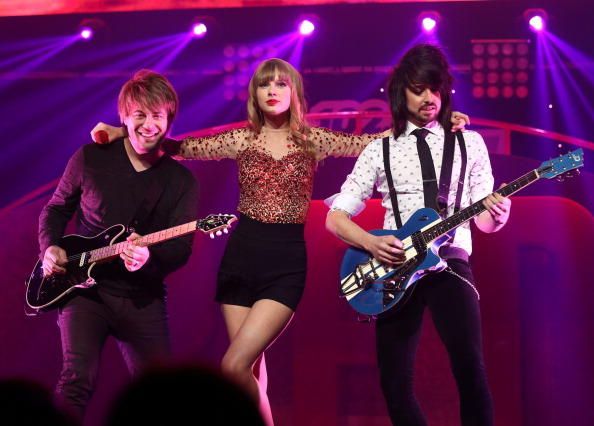
As a father of young daughters, I knew I would inevitably be exposed to potentially carcinogenic levels of Taylor Swift. As a musician and appreciator of the science of pop music, I looked forward to the challenge of decoding her massive, unprecedented success. I couldn’t help noticing that Swift has re-written several pop-music rules, so here are some observations on what I suspect makes the Taylor Swift phenomenon so unique. Apologies in advance if this has all been covered by the pop media outlets – I don’t read them. This is really just me sorting out my own thoughts.
Observation #1: The Lyrics Come First
For most pop music these days, the groove is king. Most of the songs on the Billboard Hot 100 are dance club jams. And whether it’s hip-hop or R&B, a hot backing track is usually more important than whatever Jack Harlow or Doja Cat are actually saying – case in point, as I write this, Doja Cat is at #4 on the charts with a song that lifts its groove from 1964’s “Walk On By” by Dionne Warwick. Even Ed Sheeran has to lift from Marvin Gaye to make a hit. That’s a big part of the pop formula: make it danceable, and find something familiar that the audience can’t quite place.
But Taylor Swift’s music is not dance music, and her backing tracks aren’t the main event. Her songs aren’t undanceable per se, but they don’t strike me as the first thing any DJ would pull out of a crate. And while lyrical supremacy is the norm for most singer-songwriters, singer-songwriters tend not to become the top-selling arena act with the highest grossing concert film of all time.
For Swift and for her fans, the stories inside the lyrics are what inspire their devotion. The fans don’t show up to dance their cares away, they show up to commune with the high priestess who writes their cares into her stories. This is a big reason why the re-recordings of her albums work: because nothing in the original backing tracks was uniquely magical. The stories are what matter.
Now, I’m not naïve. I know that record companies pay Clear Channel and Cumulus to play Swift’s songs every hour. But while corporate payola might sell singles, it doesn’t always translate to ticket sales or inspire the devotion that Swift’s fans demonstrate.
Observation #2: The Lyrics Are Laser-Focused
It’s an easy gripe to say that Taylor Swift is not Joni Mitchell. Of course not. She’s not a poet presenting enigmatic symbolism for her audience to decipher. She is instead an extremely good storyteller who knows her audience intimately. Her songs are really like miniature romance novels, or short films. And she writes these stories within a very specific set of parameters. Like Stephen King, she knows what her people want, and she knows how to give it to them – but unlike so many others, she knows how to do it with total conviction.
Swift’s secret sauce is that her songs are written by a girl, for girls. But not just any girls: regular-people girls. To get at what I mean by this, I can’t quite pick out what it is she does, so much as what she doesn’t do. She doesn’t do dancefloor escapism. She doesn’t do high-stakes melodrama or exaggerated melisma. She doesn’t do self-aggrandizing braggadocio. She doesn’t sell a fantasy life. She doesn’t do materialism. She doesn’t pitch herself as a superhero badass.
My sister sent me a video of Swift at 18, being asked what she wants to be doing at age 28. Chief among her responses was to “never, ever alienate my fans, ever.” Swift said she never wants to make “my personal album – that no one can relate to but I can personally relate to.” The self-denial is interesting, especially at so young an age, but the results speak for themselves. By way of comparison, as a twentysomething, I felt like John Mayer’s first album was the story of my life; but as soon as he got famous and started writing more personal songs about being “Bigger than My Body,” or how “Something’s Missing”….he lost me.
Prioritizing the fans over herself has served Swift well, but I hope she knows that she’s now in a place where she can write intensely personal songs and her fans will still follow her anywhere. With recent songs like “Anti-Hero” I can see she’s starting to get personal – it’s a song about Taylor Swift only and no one else – and it’s done quite well for her.
Observation #3: Dudes Are Not in the Demo
Unlike most pop acts, her songs are not written by a committee, or focus-group tested for general appeal, because to do that would involve writing songs dudes would dig. Any pop songwriter is inherently attempting to appeal to the widest audience of both men and women, but in doing so they have to forego a certain amount of gender specificity. Swift refuses that compromise. I’ve consumed a lot of pop songs in my years, but I have never heard an artist write so many songs aimed at the lives of young women, to the exclusion of young hetero men.
She effectively cuts out half the market in order to go all-in on the other half, the very underrepresented half. She does this through a variety of means, but to take one example: her songs regularly mention what she’s wearing. How many men’s songs regularly reference their clothing? One devoted fan even charted the references in a Tableau data-viz. And little details like “at tea time everybody agrees” in “Anti-Hero.” How may hetero dudes born before 1997 know what “tea time” means in this context? Hint: it has nothing to do with the beverage. Swift talks to girls (and gay men) the way girls talk to each other; so little details like these would probably go right over their heads.
Observation #4: She Works Clean
Well, mostly clean. She’ll toss in some swear words and references to booze here and there, but to my ears it sounds forced, like she’s trying to keep her image from being too squeaky clean. But she would never write a song like “B*tch Better Have My Money” or “F*cked My Way Up to the Top.” (I’m not hating on those types of tunes; just noting the specific stylistic choice) With the arrival of “Vigilante Sh*t,” she’s dipping her toes a little further into that water, but it stands out from her catalog as the exception rather than the rule.
Something like 75% or more of pop songs are about sex in some way, but I can’t think of any sexual subtext or innuendo in any Swift song. On top of this, Swift doesn’t present a persona that’s untouchably cool like, say, Madonna, or world-weary like Lana Del Rey or Miley Cyrus (3 years her junior!). Even a simple tune like Elle King’s “Ex’s and Oh’s” has a line like, “they always want to come but never want to leave.” I can’t imagine Swift ever using the word “come,” with its overtones of sexual climax. She works clean. She has 9-year olds in the audience (and I’m one of their dads, so it’s something I notice and appreciate).
Observation #5: Beatlemania 2.0
When girls were driven to insanity by The Beatles writing songs about holding hands, that was revolutionary in its simplicity and specificity – boys writing chaste, romantic songs about what girls want. Today it’s a boy-band formula. With the advent of Taylor Swift, though, girls have one of their own writing chaste, romantic songs about what girls want. It’s no wonder the arenas are full of screaming girls again.
(Sure, girls are screaming for BTS, too, but will they still need BTS when they’re 34? Not to mention Swift’s fanbase is multigenerational while BTS’s is decidedly not.)
Another parallel: not since The Beatles has an artist been allowed the chance to mutate so radically every couple of albums. She’s bounded across genres – she’s done country albums, a rock album, synth pop, and whatever the hell “reputation” is (it’s not R&B, and it’s not hip-hop, but it steals just enough gestures from those genres to almost qualify).
All of this is not to say that her songs are as musically inventive as the Beatles were, but again, the backing track is not where the action is for Swift’s audience. The screaming Beatlemaniacs probably didn’t notice or care when Paul would convert a Major IV to a minor iv. It’s an unfair expectation, because Swift has never had the luxury of a John Lennon to collaborate with, to compete with, to see who can write the more interesting chord progression, or find a fancier countermelody in a vocal harmony. She doesn’t have George Martin arranging trumpet solos, and she doesn’t have George or Ringo to contribute. Sure, she has Jack Antonoff and Aaron Dessner when she wants them, but ultimately she’s driving the bus. And unlike the Beatles, she didn’t quit touring halfway through her career to become an eccentric studio wizard.
Observation #6: Swift’s Musicology
For the musicians out there: something peculiar I’ve noticed about Swift’s catalog is she mainly uses major/minor/sus chords. I’ve yet to find a standalone dominant chord or a major 7th anywhere (“Teardrops on my Guitar” has one C7/E chord, though). Plenty of minor 7ths, but no majors. I don’t know if this is just a convention of modern pop songwriting or Nashville norms, but it’s another example of things she just doesn’t do. I would love to see her follow Michelle Branch or John Mayer by throwing in some 9th chords, dominants, major 7ths. “Lover” has some nice add9s, but that’s as adventurous as she’s gotten so far. It’s time to jazz it up, Tay.
I also notice she enjoys ping-ponging major 3rds in her verse melodies while accenting the second beat of the bar – she does it in “Ready for It” (“But if he’s a ghost, THEN I can be a phanTOM…”) and “You’re on your Own, Kid” (“SUM-mer WENT away”). It’s a nicely distinctive syncopation that approaches funkiness – but that’s about as weird as she gets. Always focused, that girl.
Lyrically she loves a good antanaclasis – one might call them puns but they’re legit double meanings. “Devils roll the dice, angels roll their eyes”, “so we could call it even, you could call me babe for the weekend”, “we can’t make any promises now…but you can make me a drink” and “pouring my heart out to a stranger but I didn’t pour the whiskey.” I haven’t heard this sort of thing in many pop songs, but I’m guessing it’s fairly common in Nashville songwriting, as Morgan Wallen’s “Last Night” uses it a couple of times. Of course, that song (the #1 US top digital song of 2023) has six f*cking songwriters, and not one of them is named Morgan Wallen.
She also likes to replace words in repeated lines: converting “this slope is treacherous” into “this hope is treacherous.” You don’t find a ton of interior rhyme outside of the hip-hop world, so it’s a welcome twist.
Hat tip to Reddit for some of these – there are several more here and here. Again, the devotion required of the fanbase to collect these lists of motifs and themes is something I don’t think happens with other many other pop-star fanbases.
Conclusions
Swift is the rare megastar who has done the impossible: she works clean, she doesn’t write escapist dance-club bangers, she mostly writes her own songs, she controls the material, she has grown with each album, and she’s arrived at the top of the world at age 34 (well past the Logan’s Run expiration date of today’s pop stars). I’m excited to see where she goes next. I would love to see her do more collaborations – once upon a time, she covered my hero David Mead’s song “Nashville,” and I would love her to shine her megawatt spotlight onto some of the under-the-radar Nashville songwriters out there who live in the margins. Whatever she decides to do, her fans will follow her wherever she goes. I hope she makes her own White Album, or Hejira, or Pet Sounds – a departure record that gives zero f*cks about staying in her self-imposed lane. She’s broken all the other pop rules. I hope she breaks more of her own.
Like so many songs of my early childhood in the late 1970s, “Slip Slidin’ Away” became part of my pre-linguistic sensory experience. Instrumentally spare even for a Paul Simon recording, it nevertheless has the distinction of being a song I experience in my chest as some form of synaesthesia, of sound made into sensation. To a two-year old, lyrics are obviously irrelevant, so it’s a testament to the magic of Paul Simon’s voice and the distinctive “and three” percussion that the song makes an impression at all on someone whose cognitive abilities are limited.
It’s tempting to interpret the tune as a lullaby, but even then I knew the song was not telling me that everything would be alright. I understood the words in the title at least, and I knew it meant loss of control, of being slowly moved in some unintended direction.
Released in late 1977 as a bonus track for Simon’s Greatest Hits, Etc., the song went to #5 on the Billboard charts. It’s one of the few situations I can think of where an unreleased song was appended to a hits collection and actually became a hit itself. It didn’t make the cut onto Still Crazy After All These Years, so it seems as though Simon is saying “here’s this thing I didn’t want to tell you about.” Maybe he wasn’t sure it was good enough, or maybe he thought we wouldn’t understand or be prepared for the message.
Because the song was encoded in my memory as a sensation rather than a song, I never took the time later in life to comprehend the lyrics. I absorbed it as I do most songs – music first, lyrics last, if at all. Only within the last few years did I get around to comprehending the verses. A lot of Paul Simon’s tunes have a certain sadness laced with hope, but this one doesn’t offer much in the way of consolation. It simply presents the world as it is – a man too much in love, a woman with lowered (realistic?) expectations from life, a father who doesn’t explain himself, and then the final verse, the knock-down blow:
God only knows
God makes his plan
The information’s unavailable
To the mortal man
We’re working our jobs
Collect our pay
Believe we’re gliding down the highway
When in fact we’re slip slidin’ away
It’s a dark truth that we are, for the most part, not in control, much as we may think we are. Maybe it’s just the timbre of The Paul Simon Voice that softens the punch, but the song manages not to be completely depressing; instead it transmits a feeling of being at peace with an uncertain universe. As children, our lullabies are either unreasonably rosy (“you make me happy when skies are grey”) or strangely horrid (“the cradle will fall?” WTF, mom?), so “Slip Slidin’ Away” might make a good middle ground. It’s the kind of message children would benefit from hearing more often. Somehow I think it was beneficial for me.
UPDATE: I realized recently that the most likely definition of “Slip Slidin’ Away” is death. I was reminded of a talk given by Thich Nhat Hanh (and adapted by Chroma Key into a piece called “When You Drive“) wherein Han says, “we have the habit energy of wanting to arrive. That is why we want to go as quickly as possible…but we arrive at every moment…If we abandon the present moment, our final destination may be our death. You don’t want to arrive there.” So with that in mind, we really do think we’re gliding down the highway when in fact we’re just getting closer to death.